operations@unigulfems.comFree site visit · Same-day quotation
Call or WhatsApp +974 5556 3941 · Doha, Al Rayyan, Al Wakrah, Lusail, Al Khor, Mesaieed, Ras Laffan — all of Qatar


Street 230, Zone 25, Building 238, Doha, Qatar
Airside marking
Airport Runway Marking in Qatar
Runway, taxiway, holding position and apron markings applied to aviation standards — exact dimensions, specified reflectivity and colour, delivered by crews who work inside airside safety procedures and tight closure windows.
Free site visitSame-day quotation10+ years in Qatar
Overview
Precision markings inside the closure window
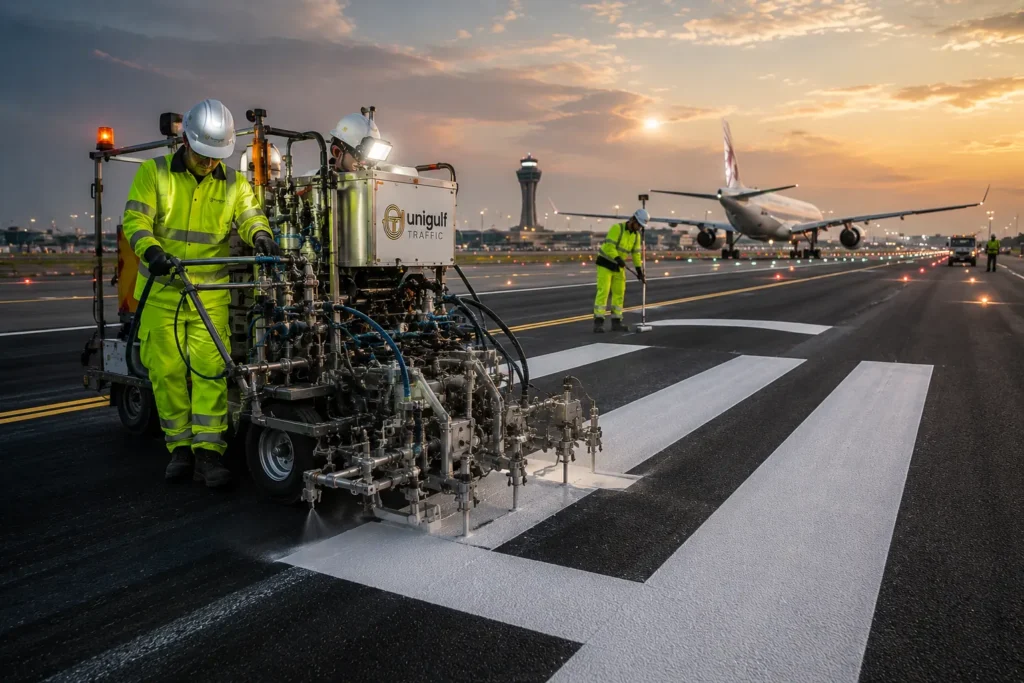
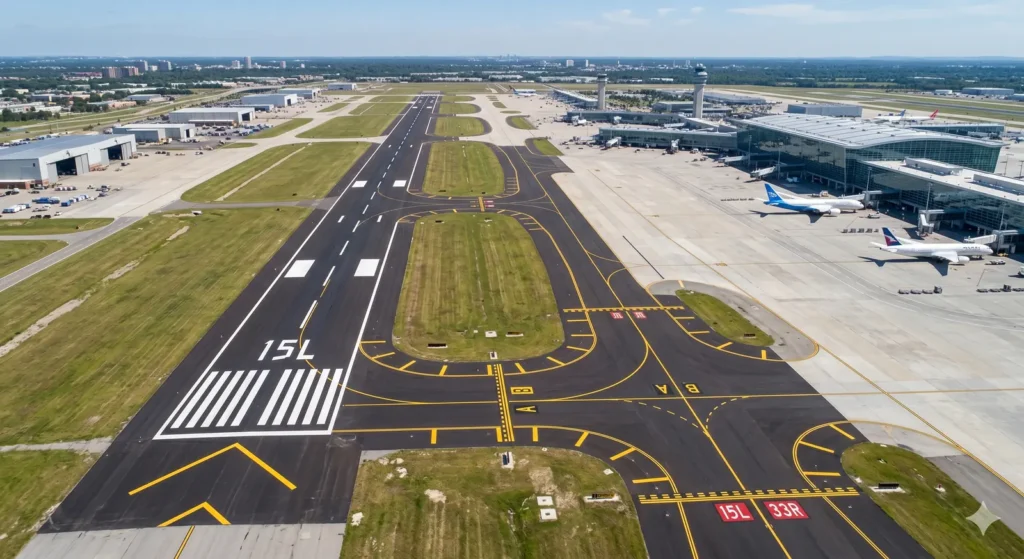
Airport runway marking in Qatar is measured in metres of tolerance and minutes of access. Threshold bars, designation numbers, touchdown zone markings, centrelines, taxiway edge and holding position markings and apron stand markings must be laid to the exact geometry in the airport’s standards, in the specified colour and reflectivity, and finished before the pavement is handed back. UniGulf Traffic plans, sets out and applies airside markings with its own equipment and airside-trained crews, so the work fits the closure window and passes the inspection that follows it.
Airfield markings follow international conventions — white for runway markings, yellow for taxiways and aprons, red and white for stand safety lines and service roads — with dimensions and layouts defined by the airport authority and the applicable ICAO Annex 14 based standards. We work from the airport’s approved drawings, set out with total-station or laser control, and apply hot thermoplastic, cold plastic or specialised airfield paint as the specification requires. Glass beads are applied to the specified rate for night and low-visibility retro-reflectivity.
Because airside work depends on permits, escorts, FOD control and precise time slots, we prepare the method statement, equipment list and crew clearances ahead of the closure and mobilise everything needed for the shift in one movement.
Talk to a road marking engineer
Send the site location and any drawings. We survey free of charge and quote line by line, usually the same day.
What we do
Airport and airfield marking scope
Every marking on the movement area and landside roads of an airport or heliport:
- Runway threshold bars, designation numbers and centreline markings
- Touchdown zone, aiming point and side stripe markings
- Taxiway centreline, edge and intermediate holding position markings
- Runway holding position markings and enhanced centrelines
- Apron stand lead-in lines, stop bars, stand numbers and safety lines
- Equipment restraint, service road and vehicle corridor markings
- Helipad markings — H, TLOF, FATO and perimeter lines
- Coloured surfacing for airside road crossings and stand safety zones
- Rubber and old marking removal ahead of re-marking
- Landside roads, car parks and drop-off marking
- Glass bead application to specified retro-reflectivity
- Method statements, permits coordination and closure-window planning
Materials & specification
Materials for airside pavements
Airport markings are applied in the material the specification names: hot-applied thermoplastic where a durable, thick line is required on asphalt; MMA cold plastic where fast cure, chemical resistance to fuel and de-icing agents or concrete bonding matter; or airfield-grade acrylic paint where the standard calls for a thinner, frequently refreshed marking such as apron stand lines. Glass beads are applied at the specified rate to reach the required retro-reflectivity, and skid resistance is maintained by material choice and texture so markings do not become a slip hazard when wet.
Colours are white and yellow for the movement area, with red and black used for stand safety lines, obliteration and contrast borders on light-coloured concrete. All materials are documented with data sheets and batch records for the airport’s quality file.
| Materials | Hot thermoplastic; MMA cold plastic; airfield-grade acrylic paint — as specified |
|---|---|
| Colours | White (runway), yellow (taxiway / apron), red / white (stand safety), black borders on concrete |
| Thickness | Thermoplastic 2–3 mm; MMA 1–3 mm; paint 0.3–0.5 mm |
| Reflectivity | Glass beads applied to the specified rate for night / low-visibility operations |
| Set-out | Total station / laser set-out from approved drawings; dimensions checked before application |
| Reopening | Thermoplastic minutes; MMA 20–40 minutes; paint 30–60 minutes |
| Standards referenced | Airport authority standards based on ICAO Annex 14 / Aerodrome Design Manual; project specification |
| Working | Airside permits, escorts, FOD control, closure windows and night operations |
| Surface | Asphalt and concrete pavements; rubber removal and cleaning before marking |
Where it is used
Where we mark airside and landside
Runways, taxiways and aprons at international and general aviation airports, air-force and helicopter facilities, maintenance and cargo aprons, hangar floors and airside service roads, together with the landside roads, drop-off lanes and car parks that serve them. Cold-applied MMA is often the material of choice on aprons exposed to fuel and hydraulic fluids, while thermoplastic remains standard for landside roads. Airside rubber and marking removal is offered as part of the same closure.
How we work
Our road marking process — survey to handover
Site visit & survey
An engineer measures the site, checks the surface condition, confirms the layout against your drawings or the QCS/Ashghal standard and agrees access, traffic management and working hours.
Setup & surface preparation
Traffic control is placed, old or faded lines are removed if required, and the surface is cleaned, dried and primed where the material specification calls for it.
Application
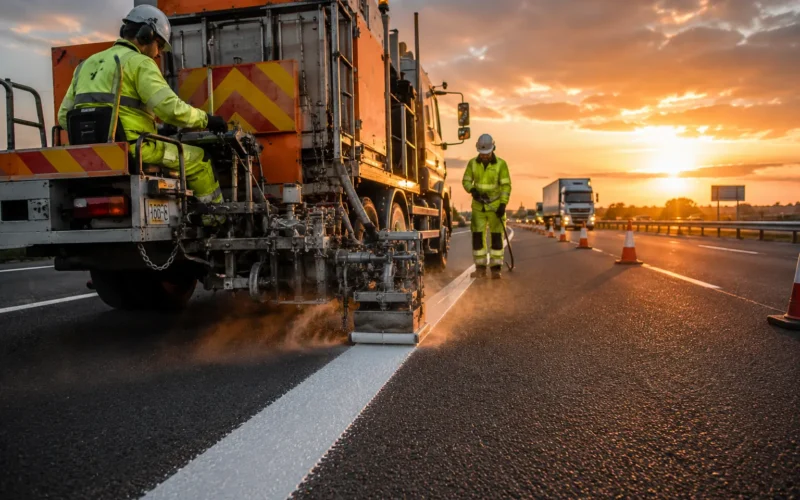
Markings are set out and applied with our own machines — thermoplastic, cold paint or MMA — with glass beads dropped on for retro-reflectivity and thickness checked during the run.
Inspection & handover
Dimensions, colour, thickness and reflectivity are checked, snags are closed the same visit, and you receive a handover with material data sheets for your submittal file.
Why UniGulf Traffic
A road marking contractor main contractors can rely on
Own equipment
Thermoplastic pre-heaters and screed applicators, airless spray line stripers, bead dispensers and removal equipment are ours — no waiting on hired plant.
Night-shift & closure windows
Crews are set up for lane closures, night works and airside or live-traffic sites where the marking window is a few hours, not a few days.
10+ years in Qatar
A decade of highways, car parks, airports and industrial sites in Qatar heat, dust and traffic — and the materials that survive it.
Itemised quotations
Every quotation is broken down by line type, length or area, material and mobilisation so QS teams can compare and approve it quickly.
Site conditions & price
Site conditions and what affects the price
Airside marking is priced per linear metre and per unit for numbers and symbols, but the quotation is shaped by access: closure length, night working, escort and permit requirements, security clearances for crews and the need to mobilise all equipment through airside gates in one movement. Rubber deposits and old markings must be removed first, and concrete pavements may need priming. Because the window is fixed, we size the crew to finish inside it with margin, and we plan the sequence so the runway or taxiway can be inspected and released on time.
What moves the price
- Length of closure window and night operations
- Airside permits, escorts, clearances and FOD control
- Material specified (thermoplastic, MMA, airfield paint)
- Removal of rubber deposits and old markings
- Concrete vs asphalt pavement (priming)
- Set-out complexity — designators, touchdown zones, stand geometry
- Testing and documentation requirements
- Mobilisation and equipment movements
Related services
Often specified together
MMA Cold Plastic Marking
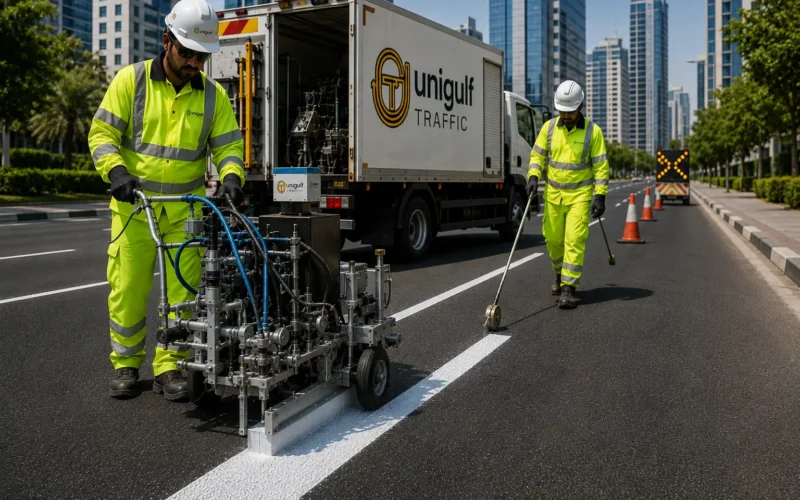
Fast-curing, fuel-resistant cold plastic for aprons and concrete.
Line Marking Removal
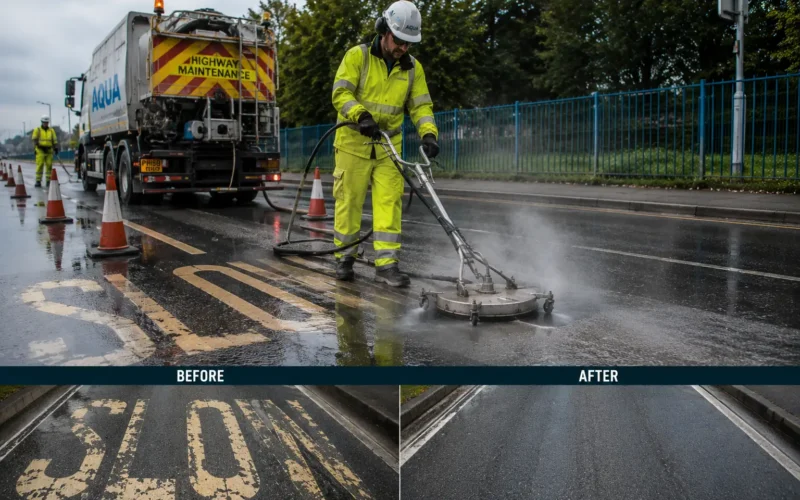
Rubber and obsolete marking removal in the same closure.
Thermoplastic Road Marking
Long-life markings for landside roads and car parks.
See all road marking services in Qatar or request a quotation for a combined scope.
FAQ
Airport runway marking — FAQ
Questions we get from QS teams, consultants and facility managers. Anything else — call +974 5556 3941.
What standards do airport markings in Qatar follow?
Can you work inside short runway closure windows?
Which material is used on aprons?
Do you remove rubber deposits and old markings?
Are your crews cleared for airside work?
Do you also mark helipads?
Free site visit · Same-day quotation
Need road marking in Qatar? Talk to an engineer today.
Send the site location, approximate area or number of bays and any drawings. We survey, confirm the specification and send an itemised quotation — usually the same working day.
Own crews & equipmentNight-shift capable10+ years in Qatar