operations@unigulfems.comFree site visit · Same-day quotation
Call or WhatsApp +974 5556 3941 · Doha, Al Rayyan, Al Wakrah, Lusail, Al Khor, Mesaieed, Ras Laffan — all of Qatar


Street 230, Zone 25, Building 238, Doha, Qatar
Reflective road studs
Road Studs in Qatar — Aluminium & Ceramic Reflective Studs
Supply and installation of reflective aluminium and ceramic road studs (cat’s eyes) for highways, roundabouts, car parks and access roads — fixed with high-strength adhesive at the correct spacing and colour code so lanes stay visible at night and in dust.
Free site visitSame-day quotation10+ years in Qatar
Overview
Night and dust visibility that paint alone cannot give
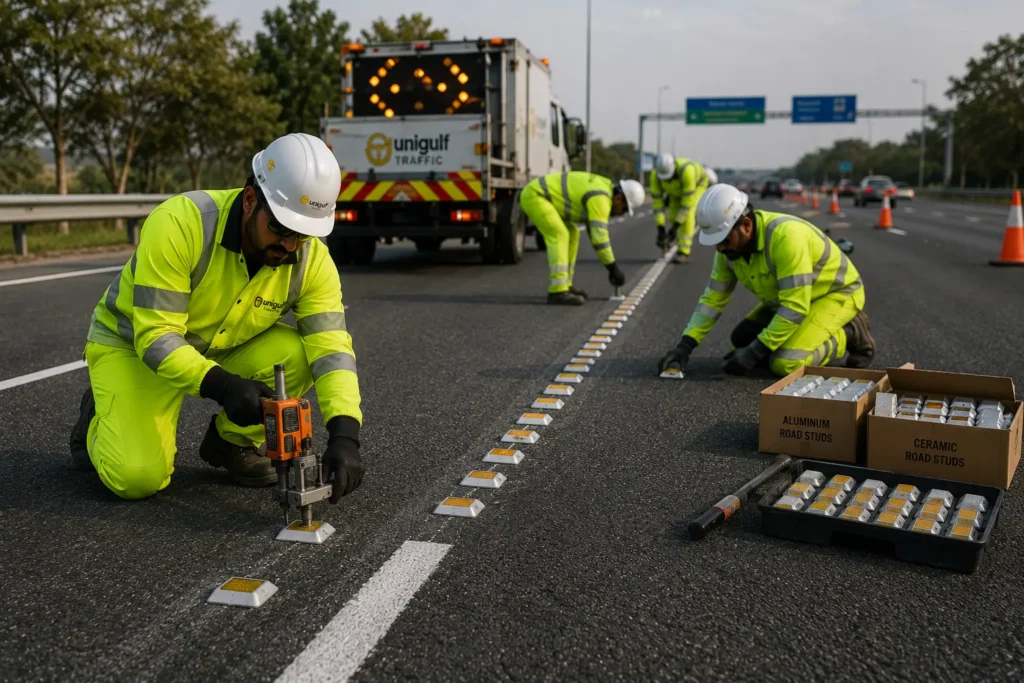
Road studs in Qatar do the job lane lines cannot do on their own: they keep the lane visible at night, in blowing dust and in rain, when a painted line disappears under headlights. UniGulf Traffic supplies and installs reflective aluminium and ceramic road studs — cat’s eyes — on highways, roundabouts, car park ramps and access roads, bonded with high-strength adhesive at the spacing and colour code the standard requires, so the studs stay fixed under heavy vehicle loads.
Two families of stud cover most Qatar projects. Aluminium studs with replaceable prismatic reflectors are the highway standard: a cast body that survives truck tyres, with reflectors in white, yellow, red, green or blue to code the lane, edge, hazard or access. Ceramic studs — glazed dome markers — are widely used on internal roads, roundabouts, car parks and compound roads, where their low profile, low cost and good daytime visibility suit lower speeds. Solar LED studs are available where an active marker is specified, for example at pedestrian crossings or hazardous curves.
Installation quality is everything. A stud installed on a dusty surface with the wrong adhesive will be gone within weeks; a stud bedded correctly will stay for years. We clean and prime each position, use two-part epoxy or bitumen adhesive as specified, and set every stud to the line and orientation so the reflector faces oncoming traffic.
Talk to a road marking engineer
Send the site location and any drawings. We survey free of charge and quote line by line, usually the same day.
What we do
Road stud supply and installation scope
Studs for every lane, edge, hazard and access point, supplied and installed by our own crew:
- Aluminium road studs with replaceable prismatic reflectors — uni- and bi-directional
- Ceramic road studs (glazed dome markers) in white, yellow, red and blue
- Solar LED road studs for crossings, curves and hazard points
- Colour coding: white lane, yellow edge / median, red hazard, green access, blue emergency
- Highway lane and edge lines, ramps and merges
- Roundabout circulatory and splitter island studs
- Car park ramps, helical ramps and basement aisles
- Compound, industrial and port access roads
- Speed hump and traffic-calming edge studs
- Replacement of damaged studs and reflector inserts
- Removal of old studs and surface make-good
- Supply-only with installation guidance for contractors
Materials & specification
Stud types, adhesives and spacing
Aluminium studs are cast bodies, typically 100–130 mm across, with a prismatic reflector in a recess protected from tyre impact; reflectors are replaced rather than the whole stud when they wear. Ceramic studs are glazed dome markers around 100 mm in diameter, low profile and highly visible in daylight, with reflective ceramic glaze or added reflectors. Both are fixed with a two-part epoxy adhesive or hot bitumen adhesive onto a cleaned, dry, primed position; on new asphalt we allow the surface to cure before fixing.
Spacing follows the project specification and Ashghal / QTCM conventions — closer on curves, ramps and hazard lengths, wider on straight highway lane lines. Colour follows the standard: white for lane lines, yellow for edge and median, red for the offside edge or hazard, green for lay-bys and access, blue where specified for emergency bays.
| Stud types | Cast aluminium with replaceable prismatic reflectors; ceramic glazed dome markers; solar LED studs |
|---|---|
| Reflectors | Prismatic, uni- or bi-directional; white, yellow, red, green, blue |
| Adhesive | Two-part epoxy or hot bitumen adhesive, as specified; surface cleaned and primed |
| Spacing | To specification / QTCM conventions; reduced on curves, ramps and hazards |
| Colour code | White lane, yellow edge/median, red hazard/offside, green access, blue emergency |
| Load rating | Aluminium studs rated for highway truck traffic; ceramic for lower-speed roads and car parks |
| Set-out | Positions marked from the lane line with consistent offset and orientation |
| Reopening | Epoxy cures in 30–60 minutes in Qatar temperatures; bitumen adhesive on cooling |
| Standards referenced | QCS / Ashghal QTCM; BS EN 1463 road stud performance where specified |
Where it is used
Where road studs are installed
Expressways and arterial roads, interchanges, roundabouts, industrial estate roads, port and logistics access roads, compound entrances, car park ramps and basement aisles, and hazard points such as sharp bends, narrowings and pedestrian crossings. Studs are usually installed together with thermoplastic lane lines on public roads, and with traffic signage on new developments. On private and compound roads, ceramic studs pair well with acrylic line marking.
How we work
Our road marking process — survey to handover
Site visit & survey
An engineer measures the site, checks the surface condition, confirms the layout against your drawings or the QCS/Ashghal standard and agrees access, traffic management and working hours.
Setup & surface preparation
Traffic control is placed, old or faded lines are removed if required, and the surface is cleaned, dried and primed where the material specification calls for it.
Application
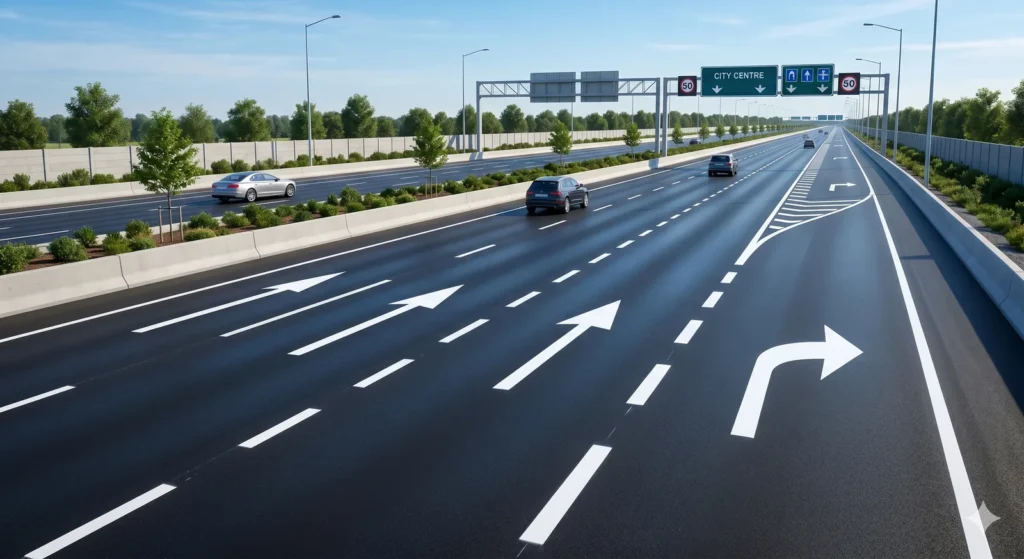
Markings are set out and applied with our own machines — thermoplastic, cold paint or MMA — with glass beads dropped on for retro-reflectivity and thickness checked during the run.
Inspection & handover
Dimensions, colour, thickness and reflectivity are checked, snags are closed the same visit, and you receive a handover with material data sheets for your submittal file.
Why UniGulf Traffic
A road marking contractor main contractors can rely on
Own equipment
Thermoplastic pre-heaters and screed applicators, airless spray line stripers, bead dispensers and removal equipment are ours — no waiting on hired plant.
Night-shift & closure windows
Crews are set up for lane closures, night works and airside or live-traffic sites where the marking window is a few hours, not a few days.
10+ years in Qatar
A decade of highways, car parks, airports and industrial sites in Qatar heat, dust and traffic — and the materials that survive it.
Itemised quotations
Every quotation is broken down by line type, length or area, material and mobilisation so QS teams can compare and approve it quickly.
Site conditions & price
Site conditions and what affects the price
Studs are quoted per unit, supplied and installed, by type. Aluminium highway studs cost more than ceramic markers; solar LED studs more again. The installation cost depends on quantity, spacing, access and whether the road is live — highway installation is done inside lane closures at night, while a compound road can be done in the day. Surface condition matters: dusty, oily or fresh asphalt positions need more preparation, and old studs must be removed and the position made good before a new stud is bedded. We can also supply studs and reflectors to contractors for their own installation.
What moves the price
- Stud type — aluminium, ceramic or solar LED
- Quantity and spacing
- Live road vs compound; lane closures and night work
- Removal of old studs and make-good
- Adhesive type specified (epoxy vs bitumen)
- Surface preparation and priming
- Combined installation with line marking
- Mobilisation distance
Related services
Often specified together
Thermoplastic Road Marking
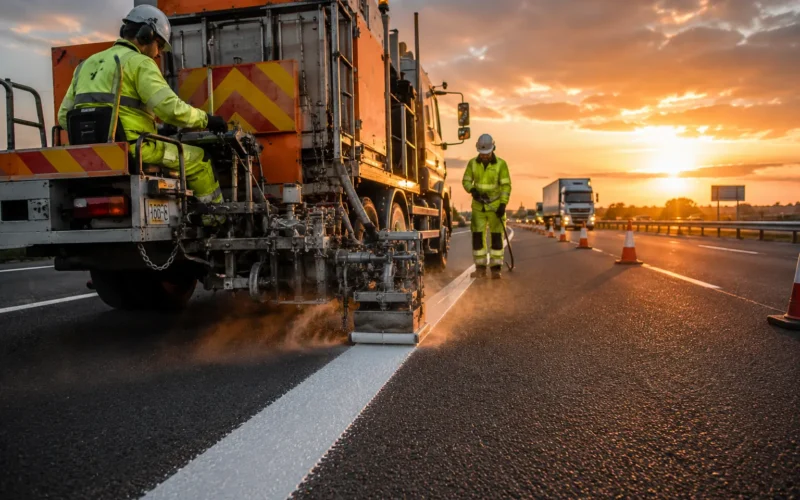
Hot-applied lane lines that the studs follow on highways and main roads.
Traffic Signage Boards
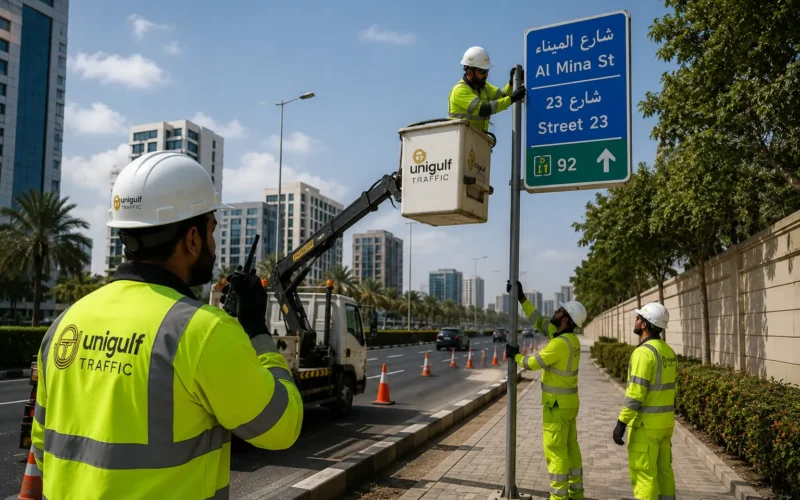
Regulatory and warning signs supplied and installed with the studs.
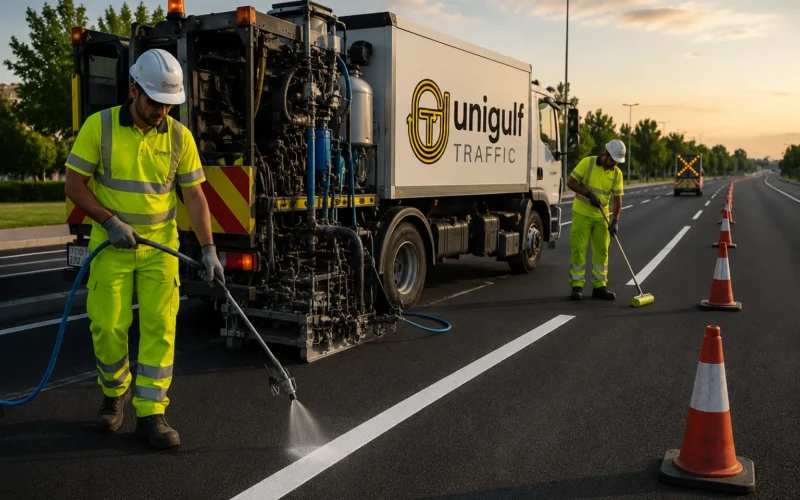
Acrylic Road Marking
Painted lines for compound and internal roads where ceramic studs are used.
See all road marking services in Qatar or request a quotation for a combined scope.
FAQ
Road studs — FAQ
Questions we get from QS teams, consultants and facility managers. Anything else — call +974 5556 3941.
What is the difference between aluminium and ceramic road studs?
What do the road stud colours mean?
How far apart are road studs placed?
How are road studs fixed to the road?
Can studs be installed on new asphalt?
Do you supply studs without installation?
Free site visit · Same-day quotation
Need road marking in Qatar? Talk to an engineer today.
Send the site location, approximate area or number of bays and any drawings. We survey, confirm the specification and send an itemised quotation — usually the same working day.
Own crews & equipmentNight-shift capable10+ years in Qatar