operations@unigulfems.comFree site visit · Same-day quotation
Call or WhatsApp +974 5556 3941 · Doha, Al Rayyan, Al Wakrah, Lusail, Al Khor, Mesaieed, Ras Laffan — all of Qatar


Street 230, Zone 25, Building 238, Doha, Qatar
Cycle lanes & tracks
Cycle Track Road Markings in Qatar
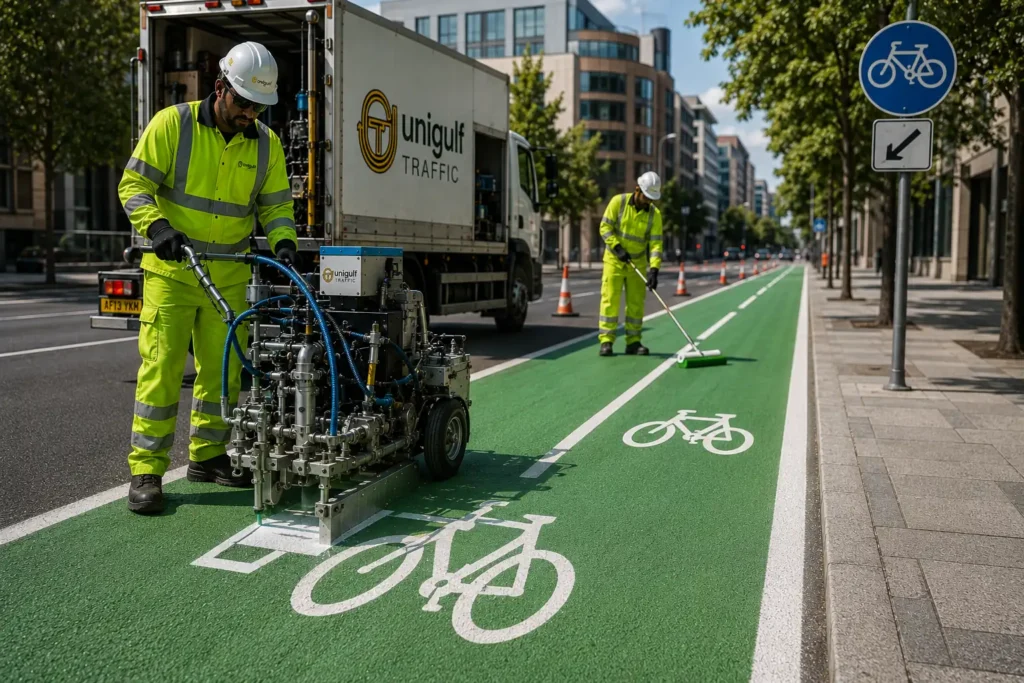
Coloured surfacing, bicycle symbols, direction arrows and lane separators for Doha’s growing cycle network — anti-skid coloured MMA and thermoplastic markings that cyclists and drivers can read at a glance.
Free site visitSame-day quotation10+ years in Qatar
Overview
Markings for a cycle network that is growing fast
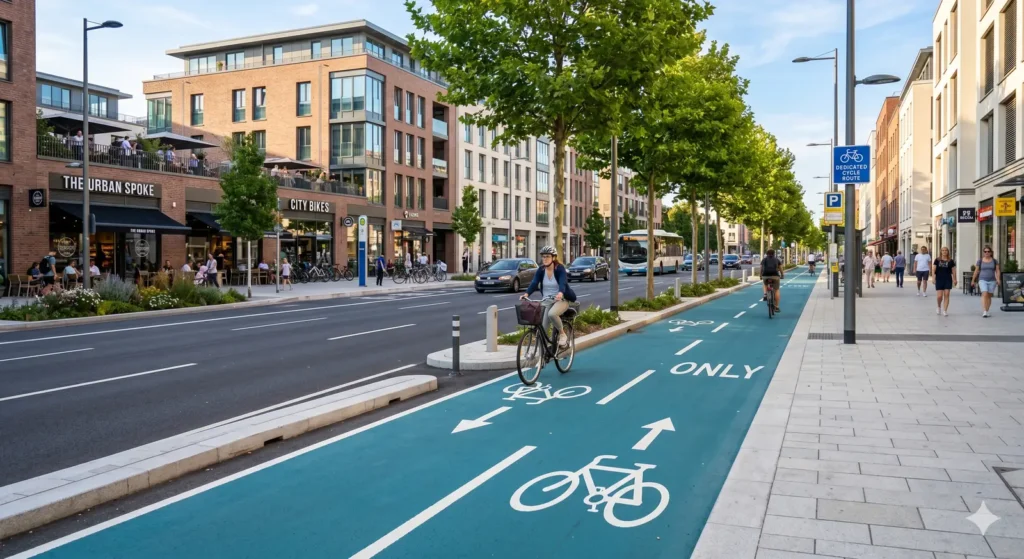
Cycle track road markings in Qatar have become a standard item on new roads, corniche and park schemes, compounds and campus developments as the cycle network expands. UniGulf Traffic applies coloured cycle lane surfacing, bicycle symbols, direction arrows, lane separators and crossing markings in anti-skid MMA and thermoplastic, so the lane is clearly distinguished from traffic, safe under a wheel in the wet and colour-fast under years of sun.
A cycle track works only if everyone can read it: cyclists need to see where the track goes, drivers need to see where it crosses their path and pedestrians need to know where not to walk. That is why cycle markings combine three things — a coloured surface that identifies the lane, white symbols and arrows that give direction and priority, and edge lines or separators that define the boundary. At junctions and side-road crossings the colour is carried across the mouth of the junction so the conflict point is obvious.
We apply cycle markings on segregated tracks, on-carriageway lanes, shared paths in parks and corniche schemes, campus and compound circuits and cycle parking areas, and we follow the design guidance and colours used in Qatar’s public realm schemes.
Talk to a road marking engineer
Send the site location and any drawings. We survey free of charge and quote line by line, usually the same day.
What we do
Cycle track marking scope
Every marking a segregated track, on-road lane or shared path needs:
- Coloured cycle lane surfacing in anti-skid MMA (green, blue, red or as specified)
- Bicycle symbols, direction arrows and lane legends
- Edge lines, centre lines and lane separators
- Junction and side-road crossing markings with continued colour
- Advanced stop lines and cycle boxes at signalised junctions
- Shared path markings for pedestrians and cyclists
- Give-way triangles, stop lines and warning markings
- Cycle parking bay and hub markings
- Kerb-separated track and buffer hatching
- Preformed thermoplastic symbols for fast installation
- Removal and re-marking of worn cycle lane surfacing
- Set-out from design drawings and handover records
Materials & specification
Materials for coloured cycle surfacing
Coloured cycle lane surfacing is best applied in MMA cold plastic with an anti-skid aggregate: it keeps its colour, resists the sun and gives grip when a cyclist brakes on a wet morning. Symbols and arrows are applied in white thermoplastic — often preformed for exact geometry — or in MMA on the coloured surface. Edge lines and separators use thermoplastic on the carriageway. Where budget leads, coloured acrylic surfacing is an economical alternative for lightly used paths, with a shorter refresh cycle.
Skid resistance is a safety item on cycle lanes, so we apply aggregate to achieve the specified surface friction and avoid smooth, glossy finishes that become slippery when wet or dusty.
| Coloured surfacing | MMA cold plastic with anti-skid aggregate (green, blue, red); acrylic for light-use paths |
|---|---|
| Symbols & arrows | White thermoplastic — preformed or screed — or MMA on colour |
| Lines & separators | Thermoplastic edge and separator lines; hatching in the buffer |
| Thickness | MMA surfacing 2–4 mm with aggregate; thermoplastic symbols 3 mm |
| Skid resistance | High-PSV aggregate broadcast for wet grip |
| Reopening | MMA 20–40 minutes; thermoplastic minutes; acrylic within an hour |
| Colours | Green and blue common in Qatar schemes; red or custom on request |
| Standards referenced | Project design guidance; QCS road marking clauses; Ashghal public realm details |
| Surface | Asphalt and concrete paths; primed where required |
Where it is used
Where cycle markings are applied
Corniche and waterfront schemes, city cycle lanes and segregated tracks, park and sports precinct circuits, university and school campuses, residential compounds, hotel and resort grounds and leisure trails. The same coloured MMA surfacing is used for bus lanes and school zones, and cycle schemes are often combined with playground and road-safety training markings or cycle route signage.
How we work
Our road marking process — survey to handover
Site visit & survey
An engineer measures the site, checks the surface condition, confirms the layout against your drawings or the QCS/Ashghal standard and agrees access, traffic management and working hours.
Setup & surface preparation
Traffic control is placed, old or faded lines are removed if required, and the surface is cleaned, dried and primed where the material specification calls for it.
Application
Markings are set out and applied with our own machines — thermoplastic, cold paint or MMA — with glass beads dropped on for retro-reflectivity and thickness checked during the run.
Inspection & handover
Dimensions, colour, thickness and reflectivity are checked, snags are closed the same visit, and you receive a handover with material data sheets for your submittal file.
Why UniGulf Traffic
A road marking contractor main contractors can rely on
Own equipment
Thermoplastic pre-heaters and screed applicators, airless spray line stripers, bead dispensers and removal equipment are ours — no waiting on hired plant.
Night-shift & closure windows
Crews are set up for lane closures, night works and airside or live-traffic sites where the marking window is a few hours, not a few days.
10+ years in Qatar
A decade of highways, car parks, airports and industrial sites in Qatar heat, dust and traffic — and the materials that survive it.
Itemised quotations
Every quotation is broken down by line type, length or area, material and mobilisation so QS teams can compare and approve it quickly.
Site conditions & price
Site conditions and what affects the price
Cycle lane work is priced per square metre of coloured surfacing and per unit for symbols, arrows and lines. Coloured MMA is the largest cost, so the area of colour drives the quotation — schemes that colour only the conflict points (junctions and crossings) rather than the full lane length are much cheaper and are standard practice in many designs. Surface condition and preparation, closure windows on live roads and the number of symbols all move the price. New asphalt should be trafficked or aged before colour is applied; concrete paths need priming.
What moves the price
- Area of coloured surfacing — full lane vs conflict points only
- Number of symbols, arrows and crossings
- Material — MMA vs acrylic surfacing
- Surface preparation and priming
- Live road closures vs off-road paths
- Kerb separators, hatching and buffer markings
- Removal of old markings
- Mobilisation distance
Related services
Often specified together
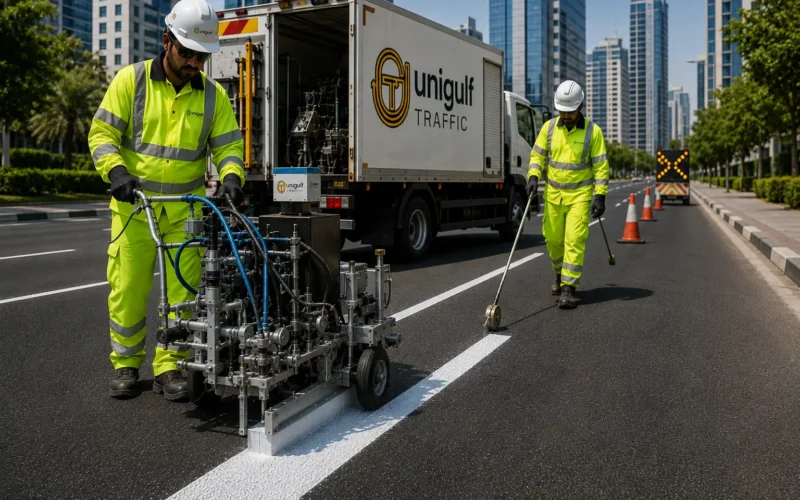
MMA Cold Plastic Marking
The anti-skid coloured surfacing used for cycle and bus lanes.
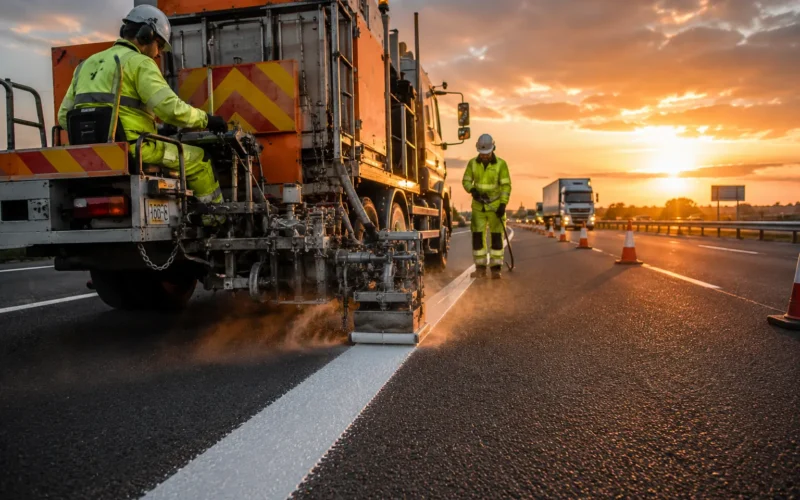
Thermoplastic Road Marking
White symbols, arrows and edge lines on the carriageway.
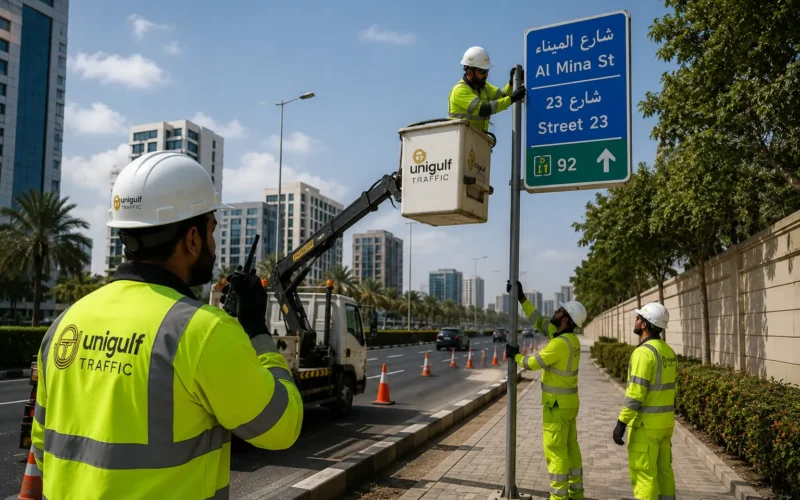
Traffic Signage Boards
Cycle route, warning and regulatory signs supplied and installed.
See all road marking services in Qatar or request a quotation for a combined scope.
FAQ
Cycle track markings — FAQ
Questions we get from QS teams, consultants and facility managers. Anything else — call +974 5556 3941.
What colour are cycle lanes in Qatar?
What material is used for coloured cycle lane surfacing?
Are cycle lane markings slippery when wet?
Do you mark cycle boxes and advanced stop lines?
Can you colour only the junctions to reduce cost?
How long do cycle lane markings last?
Free site visit · Same-day quotation
Need road marking in Qatar? Talk to an engineer today.
Send the site location, approximate area or number of bays and any drawings. We survey, confirm the specification and send an itemised quotation — usually the same working day.
Own crews & equipmentNight-shift capable10+ years in Qatar