operations@unigulfems.comFree site visit · Same-day quotation
Call or WhatsApp +974 5556 3941 · Doha, Al Rayyan, Al Wakrah, Lusail, Al Khor, Mesaieed, Ras Laffan — all of Qatar

Street 230, Zone 25, Building 238, Doha, Qatar
Hot-applied thermoplastic
Thermoplastic Road Marking in Qatar
Hot-applied thermoplastic lane lines, edge lines, arrows, chevrons and pedestrian crossings for highways, main roads and roundabouts — applied with our own screed and extrusion machines, with glass beads for night reflectivity, to QCS and Ashghal conventions.
Free site visitSame-day quotation10+ years in Qatar
Overview
The longest-lasting line for Qatar’s busiest roads
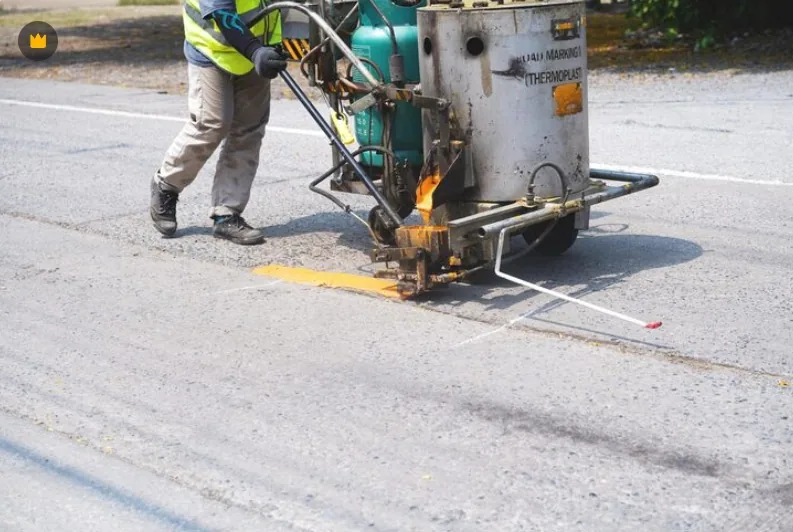
Thermoplastic road marking in Qatar is the standard specification for highways, main roads, interchanges and roundabouts because it survives what paint cannot: heavy traffic, summer surface temperatures and constant sand abrasion. UniGulf Traffic applies hot thermoplastic with its own pre-heaters and screed, extrusion and spray machines, drops on glass beads for retro-reflectivity, and checks thickness during the run so the line performs for years, not months.
The material is a blend of resin, pigment, filler and intermixed glass beads that is melted at around 180–220 °C and laid onto the road as a solid line. As it cools it sets in minutes, bonds to the asphalt and forms a raised, wear-resistant profile. Because the beads are both mixed in and dropped on, the line keeps reflecting as the surface wears down — which is why highway lane lines are almost always thermoplastic rather than paint.
Our crews have applied hot thermoplastic on Qatar highways, industrial access roads, roundabouts and compound roads for more than ten years. We work nights and inside lane closures, and we hand over with the application records and material data sheets your consultant expects.
Talk to a road marking engineer
Send the site location and any drawings. We survey free of charge and quote line by line, usually the same day.
What we do
Thermoplastic road marking scope
Everything that goes on the carriageway in hot-applied material, set out from your approved drawings or the QTCM standard details:
- Lane lines, centre lines and edge lines — continuous, broken and double
- Directional arrows, chevrons, hatching and ghost islands
- Zebra and signalised pedestrian crossings, stop and give-way lines
- Roundabout circulatory markings and splitter island hatching
- Speed hump and rumble strip markings
- Symbols and legends — BUS, SLOW, TAXI, bay numbers, disabled symbols
- Profiled (audible) edge lines on highways where specified
- Coloured thermoplastic for bus lanes, cycle lanes and school zones
- Glass bead drop-on for retro-reflectivity on every line
- Removal of old lines and re-marking after resurfacing
- Night-shift and lane-closure working with traffic management coordination
- Application records, thickness checks and handover documentation
Materials & specification
Materials, thickness and expected life
We apply hot-melt thermoplastic conforming to the specification named in your contract — typically BS 3262 or AASHTO M249 type materials as referenced by QCS — with intermixed glass beads and a drop-on bead application to BS 6088 / AASHTO M247 grades. Screed and extrusion lines are laid at the specified thickness (commonly 2–3 mm); sprayed thermoplastic is used at around 1.5 mm where a thinner, faster line is specified.
Expected life depends on traffic, surface and thickness, but on a correctly prepared asphalt surface a 3 mm screed line in Qatar typically gives several years of service before retro-reflectivity drops to the maintenance threshold. Thermoplastic bonds best to asphalt; on concrete or old, polished surfaces we prime first so the line does not lift.
| Material | Hot-melt thermoplastic — alkyd or hydrocarbon resin, pigment, filler, intermixed glass beads |
|---|---|
| Application | Screed, extrusion or spray from our own pre-heater and applicator; hand screed for symbols |
| Application temperature | Approx. 180–220 °C at the applicator (material dependent) |
| Thickness | 2–3 mm screed/extrusion; approx. 1.5 mm spray; as specified |
| Reflectivity | Intermixed beads plus drop-on glass beads at the specified rate; white and yellow |
| Set / reopening | Sets on cooling in 2–10 minutes; traffic typically within 15 minutes |
| Colours | White, yellow; red, green, blue on request |
| Standards referenced | QCS road marking clauses, Ashghal / QTCM details, BS 3262 / AASHTO M249, BS 6088 / AASHTO M247 |
| Surface | Asphalt (direct); concrete or aged surfaces with primer |
| Expected life in Qatar | Several years on main roads; longest of the three line materials |
Where it is used
Where thermoplastic is the right specification
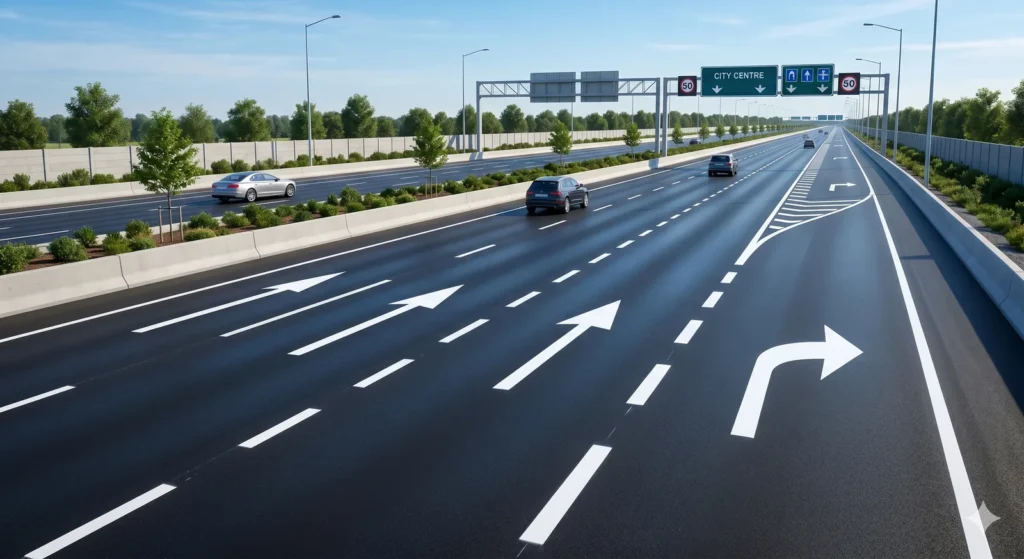
Thermoplastic is the default wherever traffic volume and speed are high and the line must stay visible at night without frequent refreshing: expressways, arterial roads, interchanges, roundabouts, industrial estate roads and airport landside roads. It is also the right choice for pedestrian crossings and stop lines, where a thicker, brighter line matters, and for any road where the client wants the longest interval between maintenance visits. For low-traffic internal roads and car parks, acrylic cold paint is usually more economical; for junctions and coloured surfacing, MMA cold plastic is the premium alternative.
How we work
Our road marking process — survey to handover
Site visit & survey
An engineer measures the site, checks the surface condition, confirms the layout against your drawings or the QCS/Ashghal standard and agrees access, traffic management and working hours.
Setup & surface preparation
Traffic control is placed, old or faded lines are removed if required, and the surface is cleaned, dried and primed where the material specification calls for it.
Application
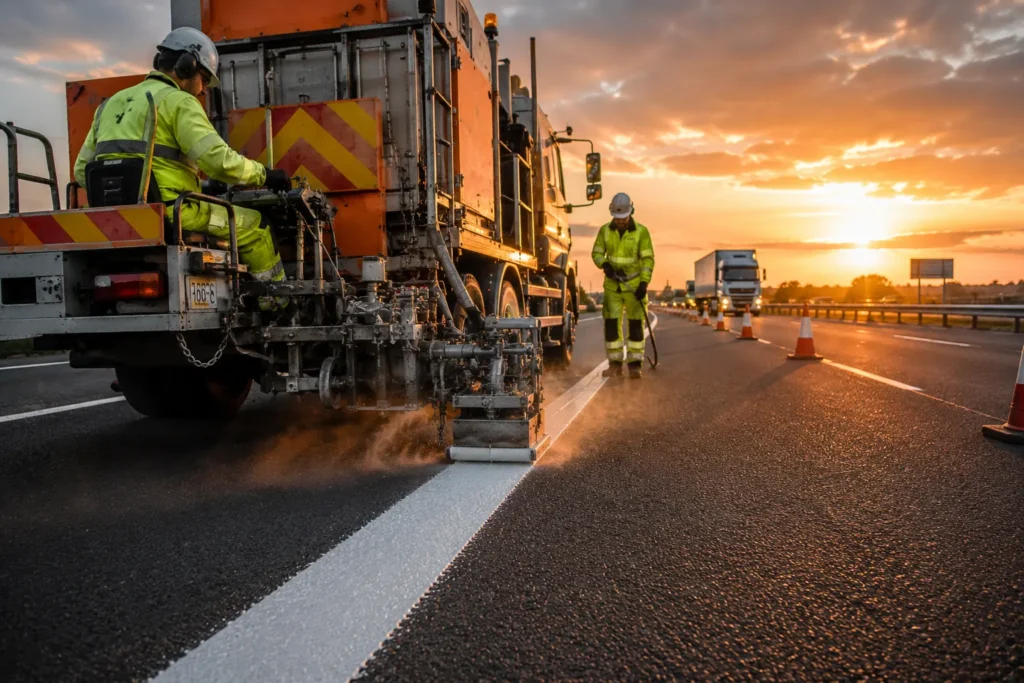
Markings are set out and applied with our own machines — thermoplastic, cold paint or MMA — with glass beads dropped on for retro-reflectivity and thickness checked during the run.
Inspection & handover
Dimensions, colour, thickness and reflectivity are checked, snags are closed the same visit, and you receive a handover with material data sheets for your submittal file.
Why UniGulf Traffic
A road marking contractor main contractors can rely on
Own equipment
Thermoplastic pre-heaters and screed applicators, airless spray line stripers, bead dispensers and removal equipment are ours — no waiting on hired plant.
Night-shift & closure windows
Crews are set up for lane closures, night works and airside or live-traffic sites where the marking window is a few hours, not a few days.
10+ years in Qatar
A decade of highways, car parks, airports and industrial sites in Qatar heat, dust and traffic — and the materials that survive it.
Itemised quotations
Every quotation is broken down by line type, length or area, material and mobilisation so QS teams can compare and approve it quickly.
Site conditions & price
Site conditions and what affects the price
Thermoplastic is priced per linear metre by line width and thickness, plus per unit for arrows, symbols and crossings. The material itself is the smaller part of the cost; mobilisation, traffic management, night working and surface preparation are what change a quotation. New asphalt needs time to cure before marking; old or polished asphalt and concrete need priming; sandy or dusty surfaces must be swept and blown clean, or the line will not bond. If existing markings are wrong or worn through, they must be removed rather than over-marked — see line marking removal.
Summer application is normal in Qatar: the material is hotter than the road in any season. What matters is a dry surface and a clean one. We schedule around dust storms and, on live roads, around your closure windows so the lane reopens on programme.
What moves the price
- Line width (100, 150, 200 mm) and thickness (1.5, 2, 3 mm)
- Total length, number of symbols and crossings
- New asphalt vs aged asphalt vs concrete (priming)
- Removal of existing markings before re-marking
- Traffic management, lane closures and night shifts
- Mobilisation distance — Doha vs Ras Laffan or Mesaieed
- Colour (white/yellow standard; coloured material costs more)
- Handover documentation and testing requirements
Related services
Often specified together
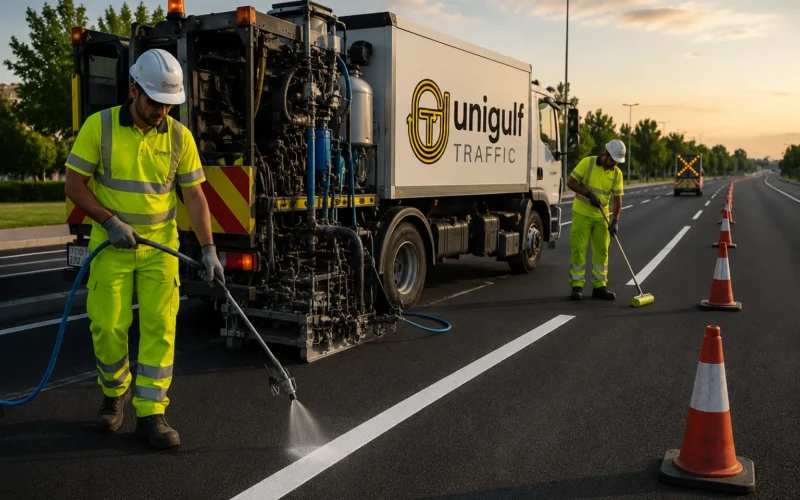
Acrylic Road Marking
Economical water-based lines for internal roads, compounds and car parks that must reopen quickly.
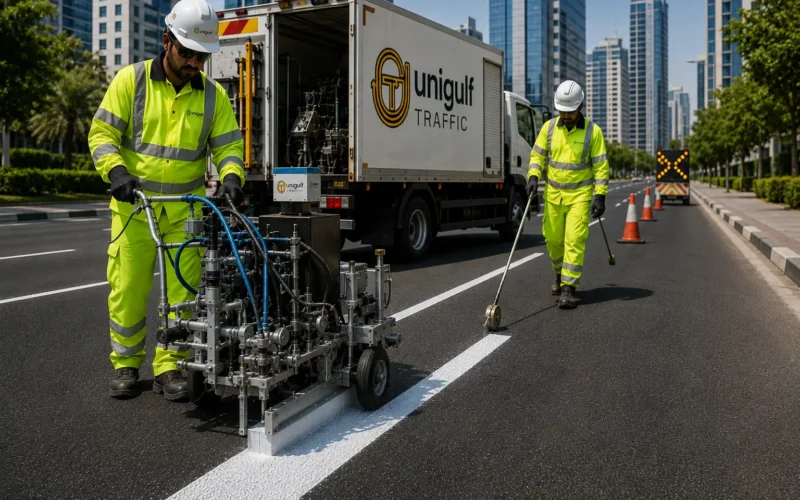
MMA Cold Plastic Marking
Premium cold plastic for junctions, coloured lanes and anti-skid surfacing where thermoplastic is not enough.
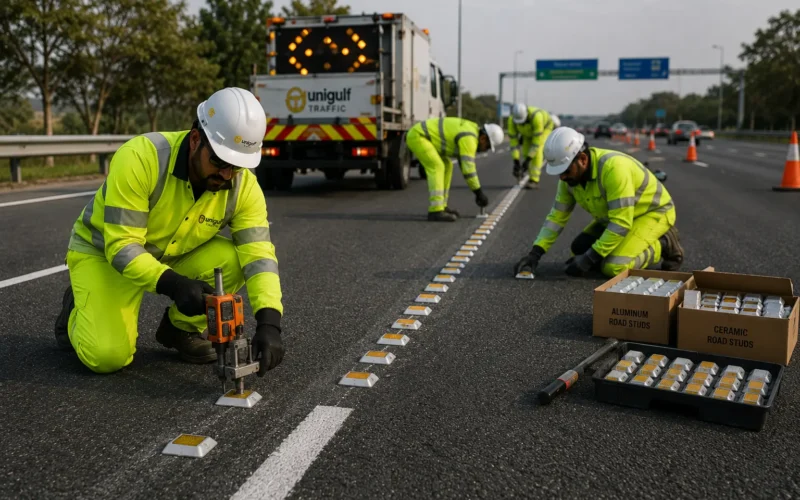
Road Studs
Reflective aluminium and ceramic studs installed with the lane lines for night and dust visibility.
See all road marking services in Qatar or request a quotation for a combined scope.
FAQ
Thermoplastic road marking — FAQ
Questions we get from QS teams, consultants and facility managers. Anything else — call +974 5556 3941.
How thick should thermoplastic road marking be in Qatar?
How long does thermoplastic last compared with paint?
Can thermoplastic be applied on concrete?
How soon can the road reopen after application?
Do you apply glass beads?
Can you mark at night or under lane closures?
Do you supply the documents for submittal?
Free site visit · Same-day quotation
Need road marking in Qatar? Talk to an engineer today.
Send the site location, approximate area or number of bays and any drawings. We survey, confirm the specification and send an itemised quotation — usually the same working day.
Own crews & equipmentNight-shift capable10+ years in Qatar