operations@unigulfems.comFree site visit · Same-day quotation
Call or WhatsApp +974 5556 3941 · Doha, Al Rayyan, Al Wakrah, Lusail, Al Khor, Mesaieed, Ras Laffan — all of Qatar
Street 230, Zone 25, Building 238, Doha, Qatar
Methyl methacrylate
MMA Cold Plastic Marking in Qatar
Two-component methyl methacrylate (MMA) cold plastic for junctions, box junctions, coloured bus and cycle lanes and anti-skid surfacing — the premium marking system that bonds chemically to the road and holds its colour for years.
Free site visitSame-day quotation10+ years in Qatar
Overview
The premium line for junctions, coloured lanes and anti-skid
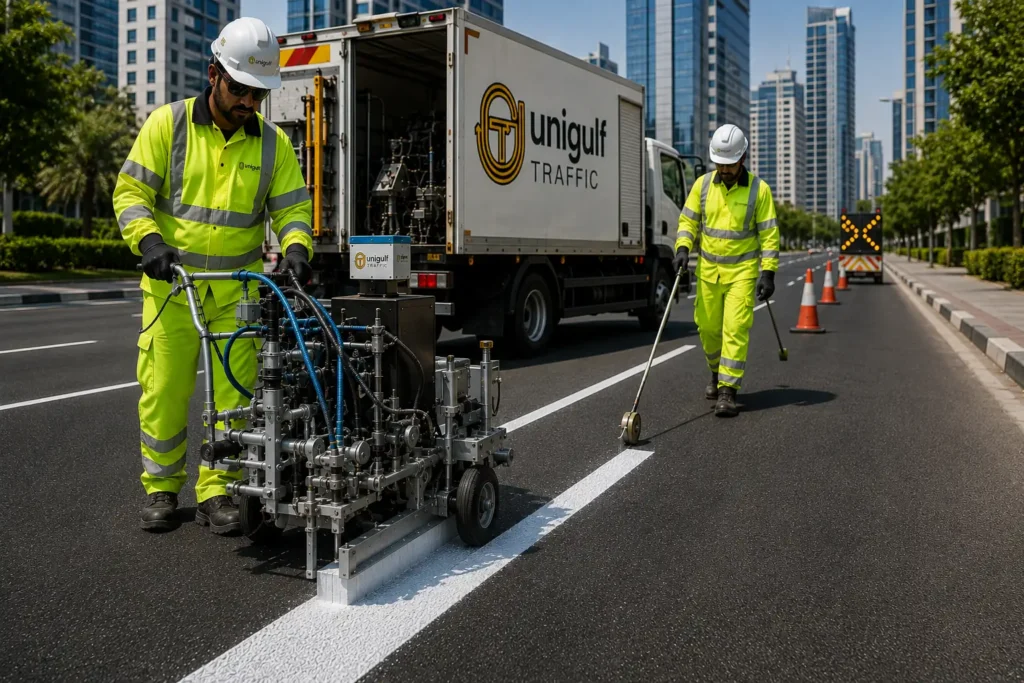
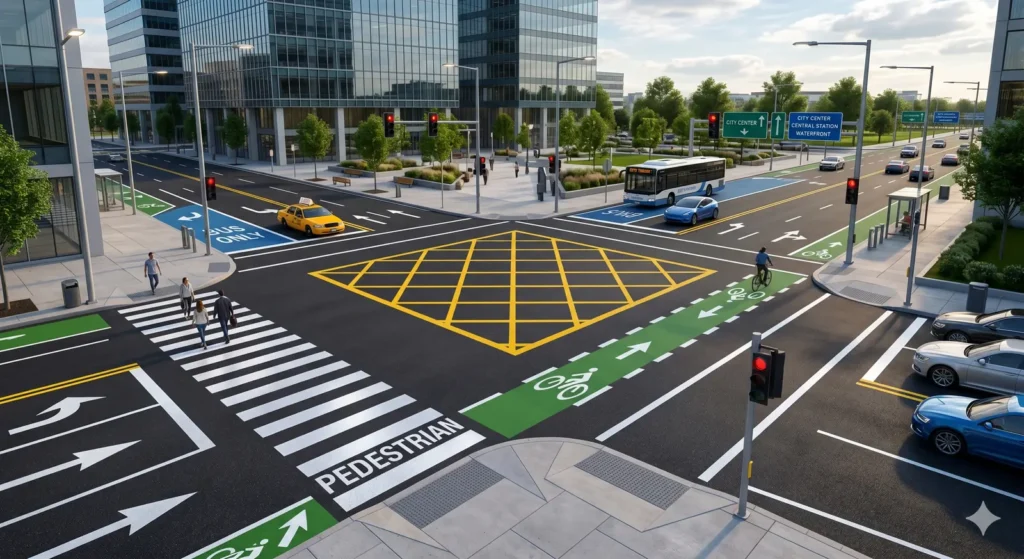
MMA cold plastic marking in Qatar is specified where a thermoplastic or painted line is not enough: heavily braked junction approaches, yellow box junctions, coloured bus and cycle lanes, bridge decks and high-friction surfacing. UniGulf Traffic applies two-component methyl methacrylate by hand screed and spray, with drop-on beads or anti-skid aggregate, giving a marking that cures chemically, resists abrasion and UV, and keeps its colour long after paint has faded.
MMA is a cold-applied resin system: the base material is mixed with a peroxide hardener on site and cures by chemical reaction rather than by drying or cooling. That gives three practical advantages. It bonds to asphalt and concrete without heat, so there is no thermal shock to the surface; it can be laid thick (2–3 mm) or thin (spray) from the same chemistry; and it accepts coloured pigments and high-friction aggregates that thermoplastic cannot hold as well. The result is the most durable marking available for the points on a road where lines take the most punishment.
Our crews mix and apply MMA to the manufacturer’s ratios, control cure with the correct hardener percentage for the day’s temperature, and hand over with product data sheets and application records for the submittal file.
Talk to a road marking engineer
Send the site location and any drawings. We survey free of charge and quote line by line, usually the same day.
What we do
MMA cold plastic scope
Cold plastic markings and surfacing for the highest-wear locations on the network:
- Yellow box junctions and keep-clear markings
- Stop lines, give-way lines and junction approach markings
- Coloured bus lane surfacing (red / burgundy)
- Coloured cycle lane and cycle track surfacing (green / blue)
- High-friction anti-skid surfacing on approaches and bends
- Bridge deck and flyover markings
- Pedestrian crossings and school-zone coloured surfacing
- Profiled and structured (agglomerate) lines for wet-night visibility
- Symbols, arrows and legends in cold plastic
- Car park entrance ramps and helical ramps
- Airport apron and airside markings where cold plastic is specified
- Application records, mix ratios and handover documentation
Materials & specification
Materials, thickness and cure
We apply two-component MMA cold plastic systems — base resin plus benzoyl peroxide (BPO) hardener — by hand screed box for 2–3 mm lines and surfacing, by spray for thinner applications, and by trowel for structured or profiled lines. Glass beads are dropped on for reflectivity; for anti-skid surfacing, calcined bauxite or a similar high-PSV aggregate is broadcast into the wet resin to achieve the specified skid resistance.
Cure time is controlled by hardener percentage and temperature and is typically 20–40 minutes to traffic. Because the material cures chemically it can be applied in cooler night conditions as well as summer heat. Expected service life is the longest of the marking systems we offer, and colour retention is excellent — an important point for coloured lanes that must stay recognisable for years.
| Material | Two-component methyl methacrylate (MMA) cold plastic with BPO hardener |
|---|---|
| Application | Hand screed box, spray, or trowel for structured lines; broadcast aggregate for anti-skid |
| Thickness | 2–3 mm screed; approx. 0.6–1 mm spray; anti-skid 3–4 mm with aggregate |
| Reflectivity | Drop-on glass beads; profiled lines for wet-night retro-reflectivity |
| Skid resistance | High-PSV aggregate (e.g. calcined bauxite) where anti-skid surfacing is specified |
| Cure / reopening | Typically 20–40 minutes to traffic, temperature dependent |
| Colours | White, yellow, red, green, blue, black; custom RAL on request |
| Standards referenced | QCS road marking clauses; BS EN 1871 cold plastic types; project specification |
| Surface | Asphalt and concrete, clean and dry; primer on concrete where specified |
| Expected life in Qatar | Longest of the three systems; excellent colour and abrasion resistance |
Where it is used
Where MMA cold plastic is worth specifying
MMA earns its price where lines are braked on, turned on and sun-baked: signalised junction approaches, box junctions, roundabout entries, bus lanes that must stay red, cycle lanes that must stay green, ramps and bends that need extra grip. It is also the right system for bridge decks and concrete surfaces where hot thermoplastic bonds poorly, and for airside areas where a cold-applied, fast-curing material is preferred. For the rest of the road, thermoplastic lane lines remain the economical long-life choice, and for cycle track markings MMA is usually the coloured surfacing of choice.
How we work
Our road marking process — survey to handover
Site visit & survey
An engineer measures the site, checks the surface condition, confirms the layout against your drawings or the QCS/Ashghal standard and agrees access, traffic management and working hours.
Setup & surface preparation
Traffic control is placed, old or faded lines are removed if required, and the surface is cleaned, dried and primed where the material specification calls for it.
Application
Markings are set out and applied with our own machines — thermoplastic, cold paint or MMA — with glass beads dropped on for retro-reflectivity and thickness checked during the run.
Inspection & handover
Dimensions, colour, thickness and reflectivity are checked, snags are closed the same visit, and you receive a handover with material data sheets for your submittal file.
Why UniGulf Traffic
A road marking contractor main contractors can rely on
Own equipment
Thermoplastic pre-heaters and screed applicators, airless spray line stripers, bead dispensers and removal equipment are ours — no waiting on hired plant.
Night-shift & closure windows
Crews are set up for lane closures, night works and airside or live-traffic sites where the marking window is a few hours, not a few days.
10+ years in Qatar
A decade of highways, car parks, airports and industrial sites in Qatar heat, dust and traffic — and the materials that survive it.
Itemised quotations
Every quotation is broken down by line type, length or area, material and mobilisation so QS teams can compare and approve it quickly.
Site conditions & price
Site conditions and what affects the price
MMA is the most expensive marking material per square metre, so it is priced per m² for surfacing and per linear metre or per unit for lines and symbols. The material cost dominates; application is skilled but quick. Anti-skid surfacing adds the aggregate and a thicker build. Surfaces must be clean, dry and sound — MMA will bond to almost anything but it will also faithfully reproduce any dust layer between it and the road, so preparation is not optional. New asphalt should be trafficked or aged as the manufacturer advises before coloured surfacing is applied.
Because the system cures fast, MMA is often the best answer inside very short closure windows even when a cheaper material would technically do — the lane reopens sooner and the closure costs less.
What moves the price
- Area of coloured surfacing (m²) and line quantities
- Screed thickness and whether anti-skid aggregate is required
- Colour — standard vs custom pigments
- Surface preparation: cleaning, degreasing, priming concrete
- Closure windows, night work and traffic management
- Removal of existing markings or surfacing
- Skid-resistance testing and documentation requirements
- Mobilisation distance
Related services
Often specified together
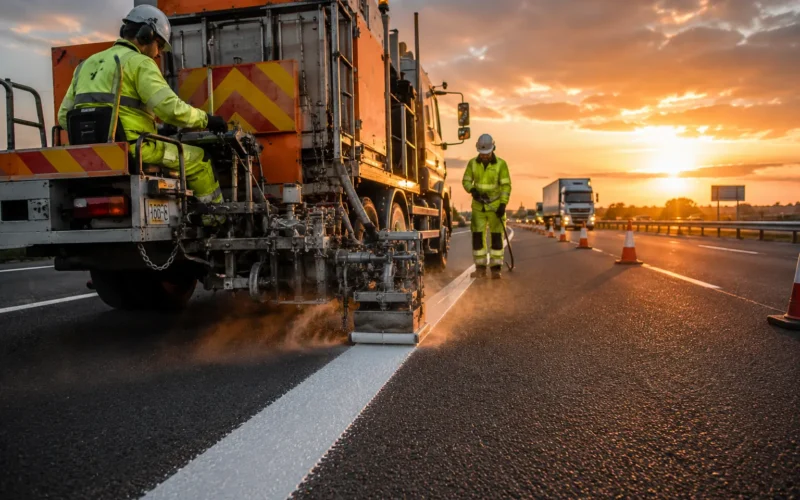
Thermoplastic Road Marking
Hot-applied lane and edge lines for the rest of the carriageway.
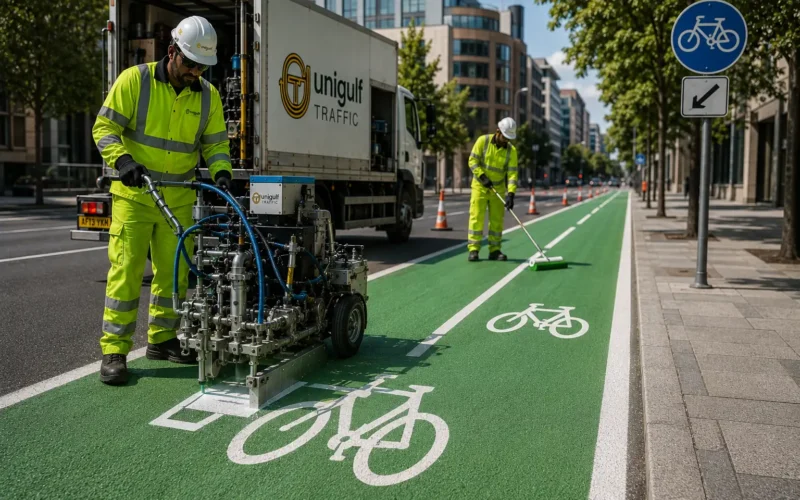
Cycle Track Road Markings
Coloured cycle track surfacing, symbols and separators for Doha’s cycle network.
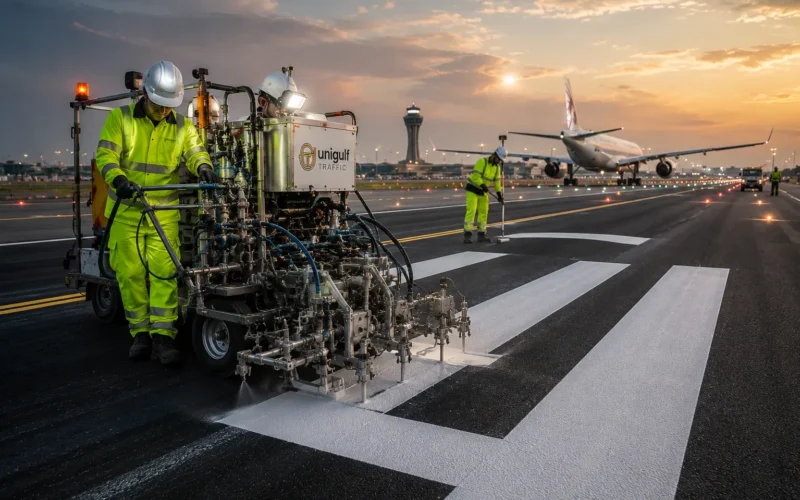
Airport & Runway Marking
Runway, taxiway and apron markings applied inside airside closure windows.
See all road marking services in Qatar or request a quotation for a combined scope.
FAQ
MMA cold plastic marking — FAQ
Questions we get from QS teams, consultants and facility managers. Anything else — call +974 5556 3941.
What is MMA cold plastic road marking?
Is MMA better than thermoplastic?
How long does MMA marking last in Qatar?
Can MMA be used for anti-skid surfacing?
How long before traffic can use it?
Does MMA work on concrete and bridge decks?
Free site visit · Same-day quotation
Need road marking in Qatar? Talk to an engineer today.
Send the site location, approximate area or number of bays and any drawings. We survey, confirm the specification and send an itemised quotation — usually the same working day.
Own crews & equipmentNight-shift capable10+ years in Qatar